
Biological Systems Intelligence for Reproductive and Population-Scale Outcomes
CORGData develops computational models, simulation frameworks, and governance systems for assisted reproductive technology, population-level biological forecasting, and genetic-pool research.
The platform begins with ART outcome modeling and extends toward long-term biological preservation, simulation, and governed biological systems.
A staged platform for biological systems modeling
CORGData is built in layers. The near-term focus is ART outcome modeling and reproductive health simulation.
The scientific core extends into population-scale modeling, synthetic cohort simulation, and genetic-pool governance.
The long-range research layer explores preservation, continuity, and future biological system design.
ART Outcome Modeling
Predictive models for assisted reproductive technology outcomes, patient cohorts, and treatment pathways.
Genetic Pool Governance
Frameworks for preserving diversity, modeling selection pressure, and governing long-term biological risk.
Population Simulation
Computational systems for modeling how biological traits and outcomes shift across cohorts and generations.
Frontier Research
Exploratory work on biological preservation, continuity, and future reproductive systems.
Model outputs and simulation surfaces
CORGData uses computational models to convert biological data into testable system outputs. These examples show how outcome surfaces, cohort structure, modeled pressure, and diversity constraints can be simulated before real-world decisions are made.
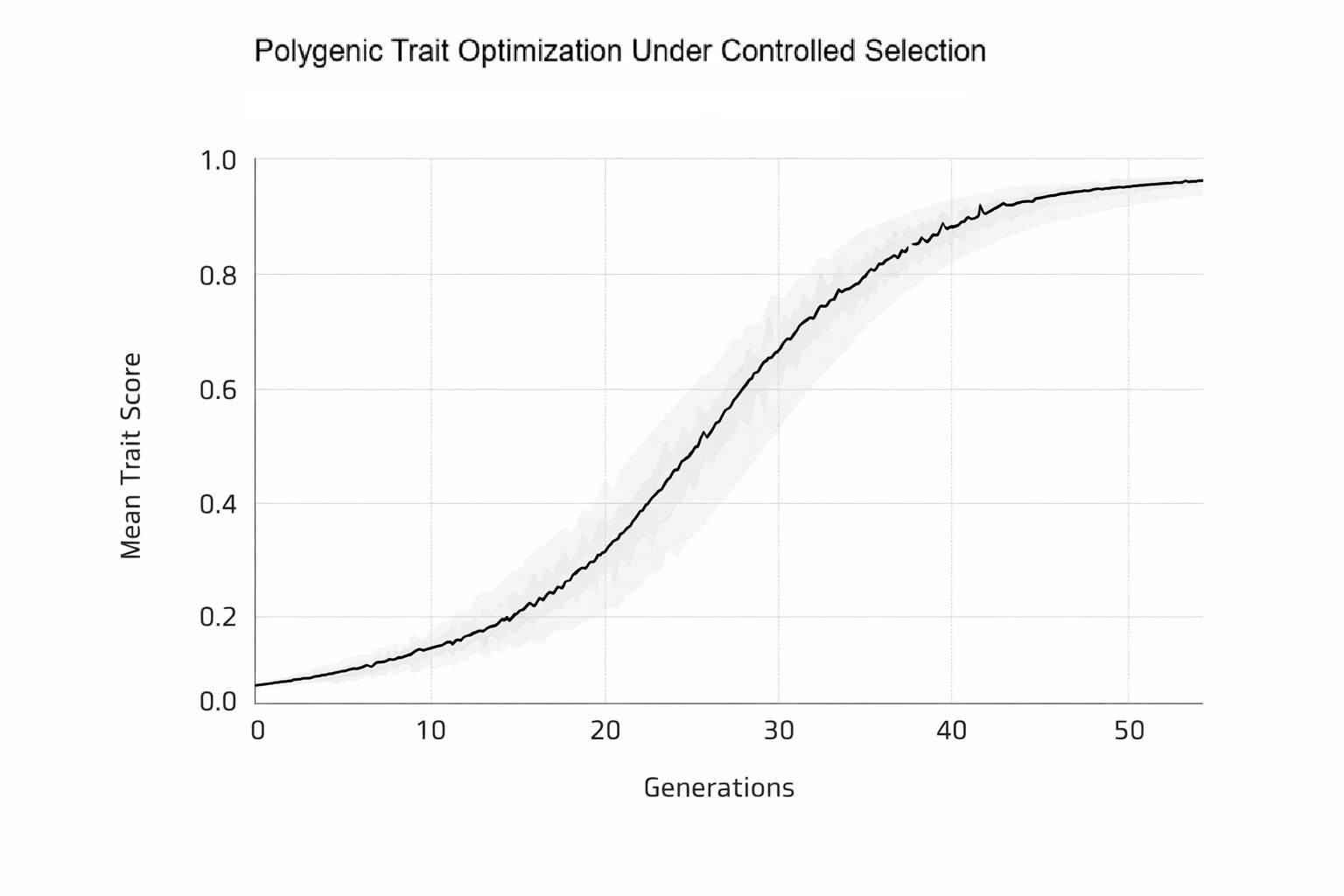
Model Output 01: Polygenic Trait Dynamics
Simulation of a polygenic trait in a synthetic population of 10,000 over 50 generations under defined reproductive-weighting parameters. Mating is random.
Trajectory shows:
early signal emergence
accelerated distributional shift under modeled pressure
saturation toward high population frequency
Demonstrates how defined simulation parameters can shift trait distributions over time.
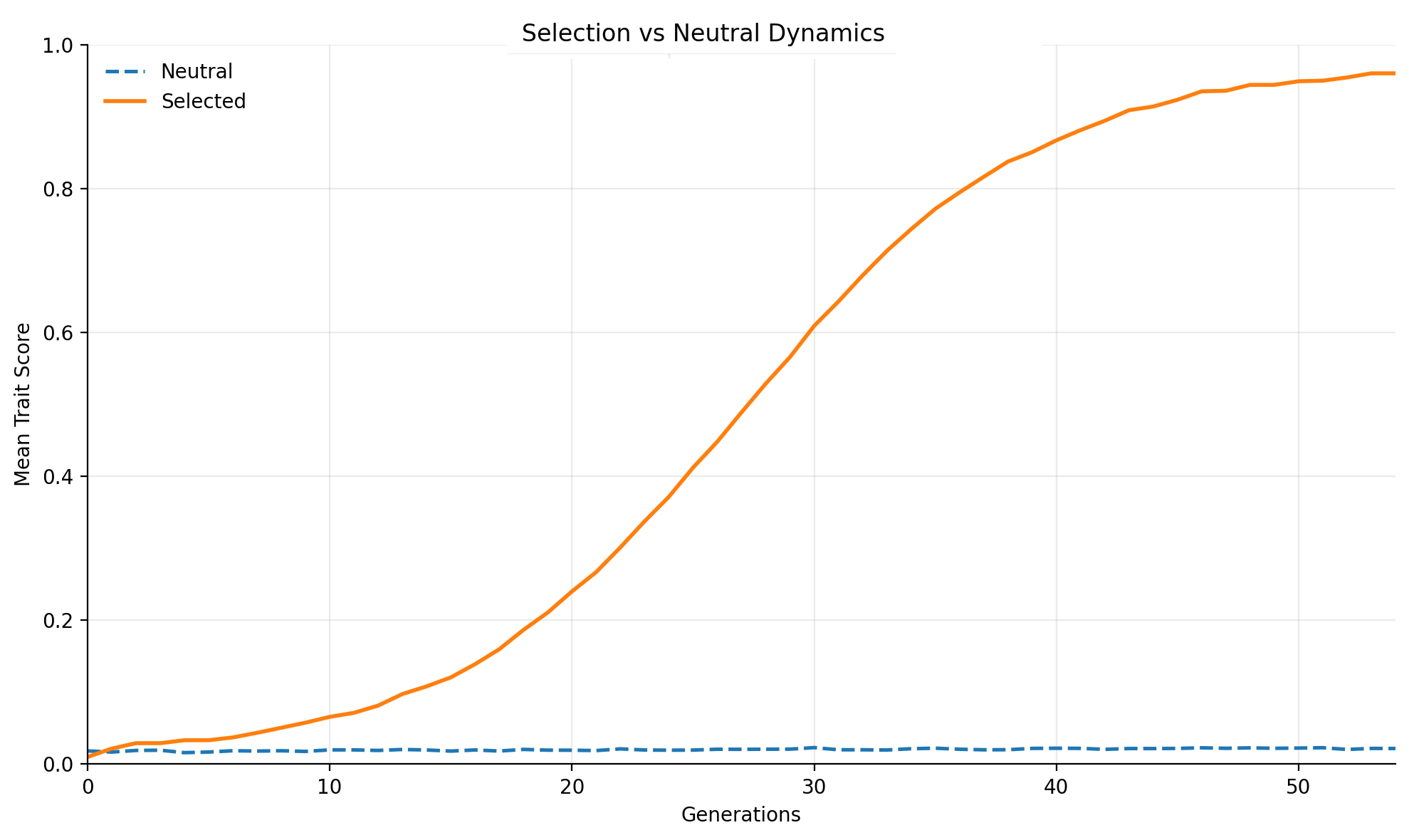
Model Output 02: Selection vs Neutral Dynamics
Same population and baseline parameters. Under modeled reproductive-weighting pressure, the trait propagates rapidly and approaches high population frequency.
Isolates how defined model parameters alter population-level trait dynamics.
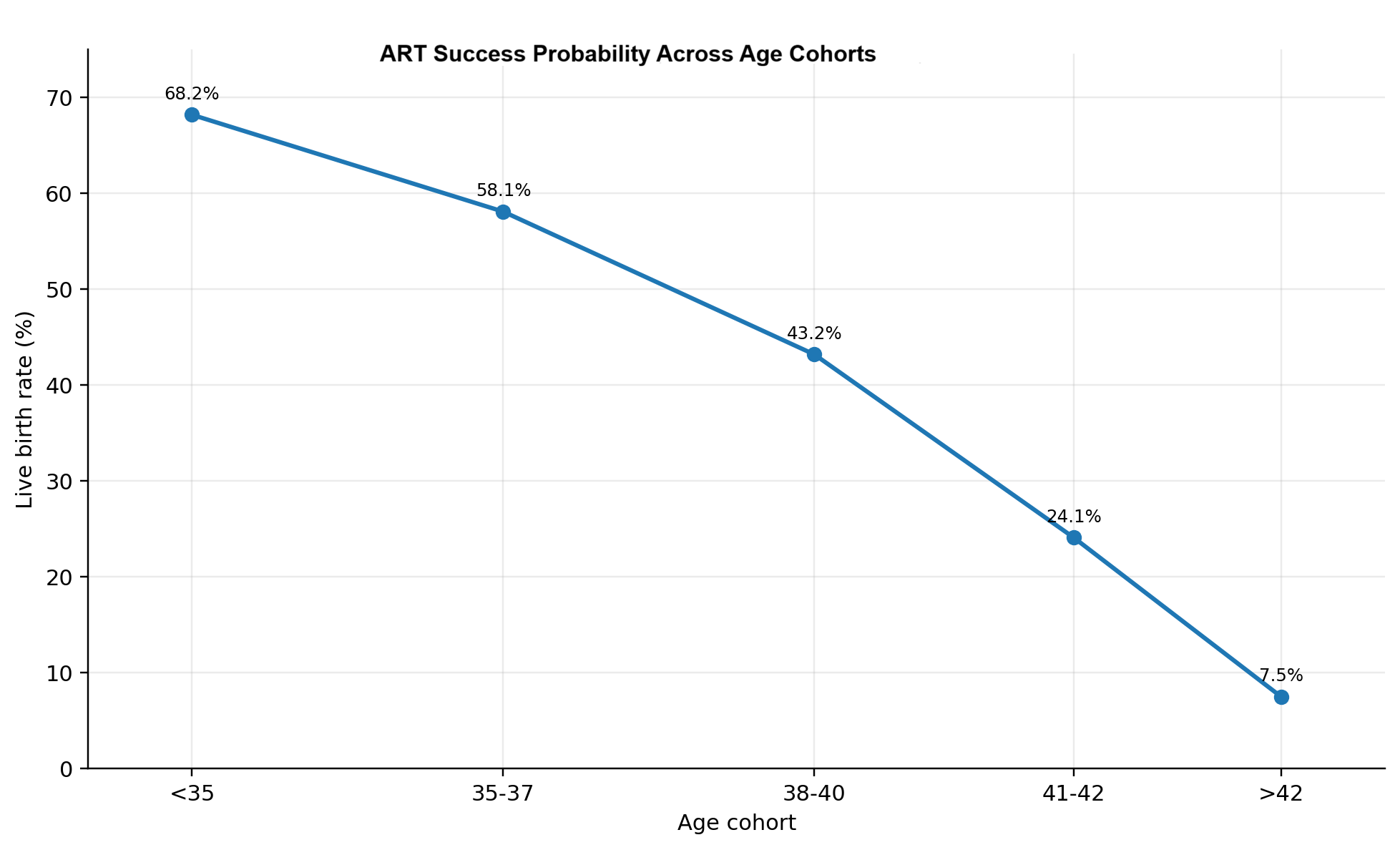
Model Output 03: ART Success Probability Across Age Cohorts
Public national ART data show a steep decline in cumulative live birth rate with increasing maternal age when using a patient’s own eggs.
Cohort curve provides a real-world outcome surface for predictive modeling, cohort simulation, and scenario design.
Source: SART national summary, patients’ own eggs, all embryo transfers.
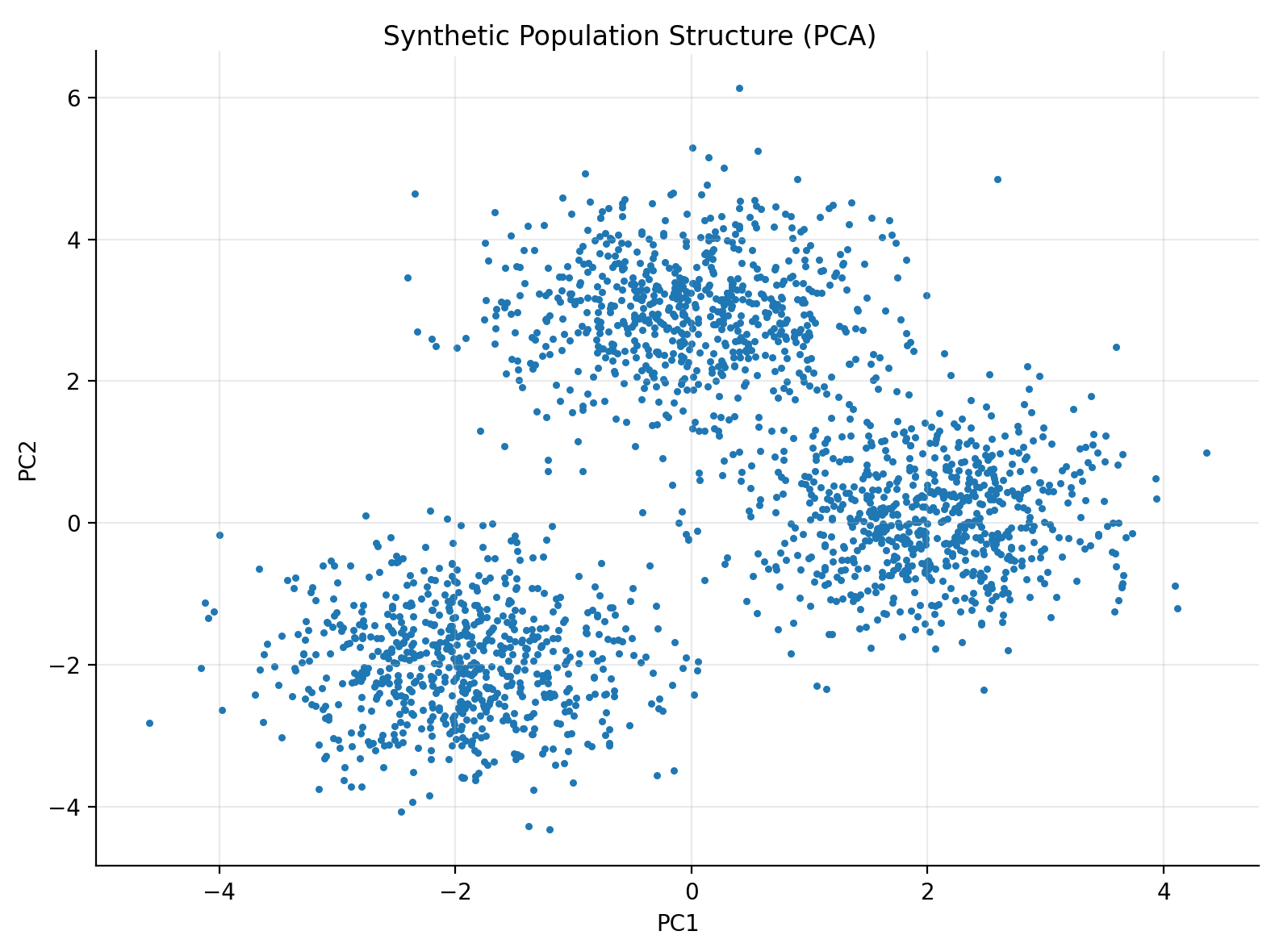
Model Output 04: Synthetic Population Structure (PCA)
Synthetic population projected into principal component space. Distinct clusters reflect underlying population structure and variation.
Provides a foundation for modeling cohort stratification, population structure, and trait distribution across subpopulations.
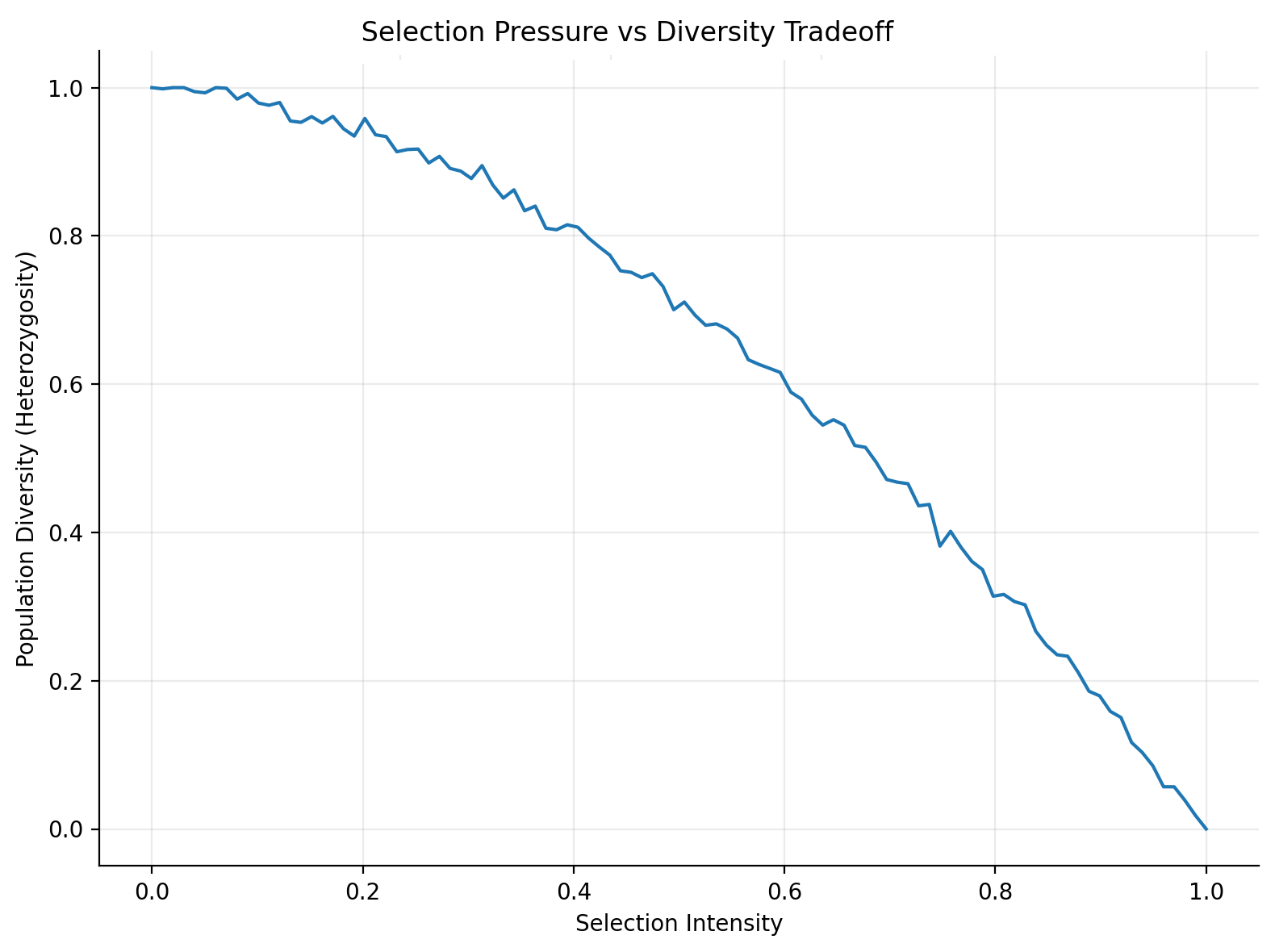
Model Output 05: Selection vs Diversity Tradeoff
Increasing modeled pressure can accelerate distributional change while reducing population diversity.
Defines a core constraint: strong directional pressure can reduce genetic variation, introducing long-term risk.
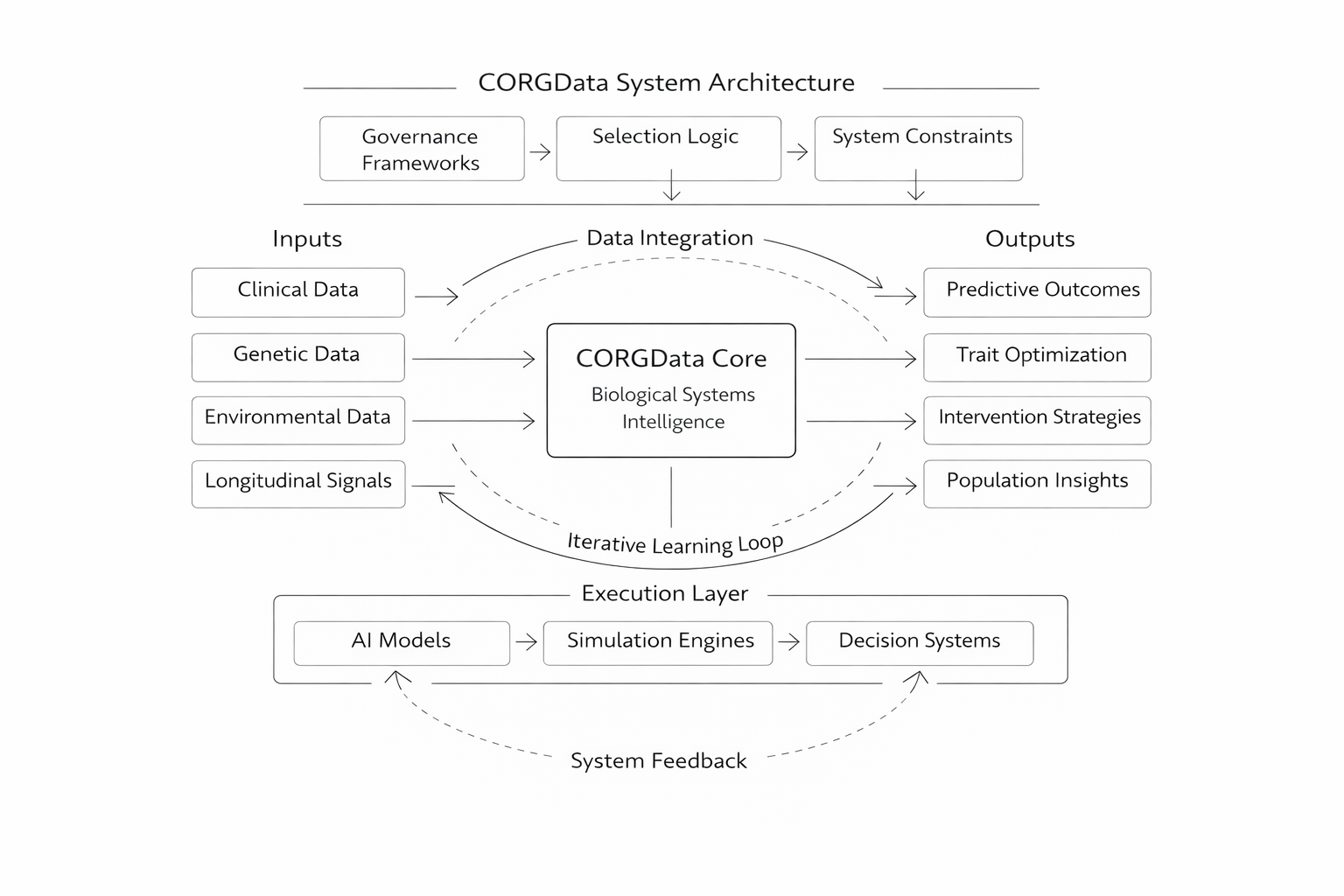
CORGData designs computational models and data architectures that move biological systems research beyond observation and into simulation, forecasting, validation, and governed decision support.
Clinical Outcome Modeling
Predictive modeling for ART, reproductive health, and longitudinal biological outcomes.
Structured systems for modeling diversity, selection pressure, inheritance, and long-term biological risk.
Biological Data Infrastructure
Architectures for organizing clinical, genomic, reproductive, and population-level data.
Synthetic Cohort Simulation
Population-scale simulations for testing biological, clinical, and governance scenarios.
AI Decision Support
Machine-assisted tools for scenario testing, forecasting, and decision support under transparent constraints.
Build with CORGData
CORGData works with research groups, fertility clinics, clinical organizations, funders, and aligned partners developing next-generation biological systems.
Engagements may include ART outcome modeling, simulation studies, research collaborations, grant partnerships, governance frameworks, or frontier biological systems research.